
California's New All-Gender Bathroom Requirement Is Unfair to Small Schools
California's new all-gender bathroom law exempts small schools from the mandate, then takes the exemption back through the money: apply for state building funds and you must build one anyway. The campuses with the least get the rawest deal, and here is what to ask.

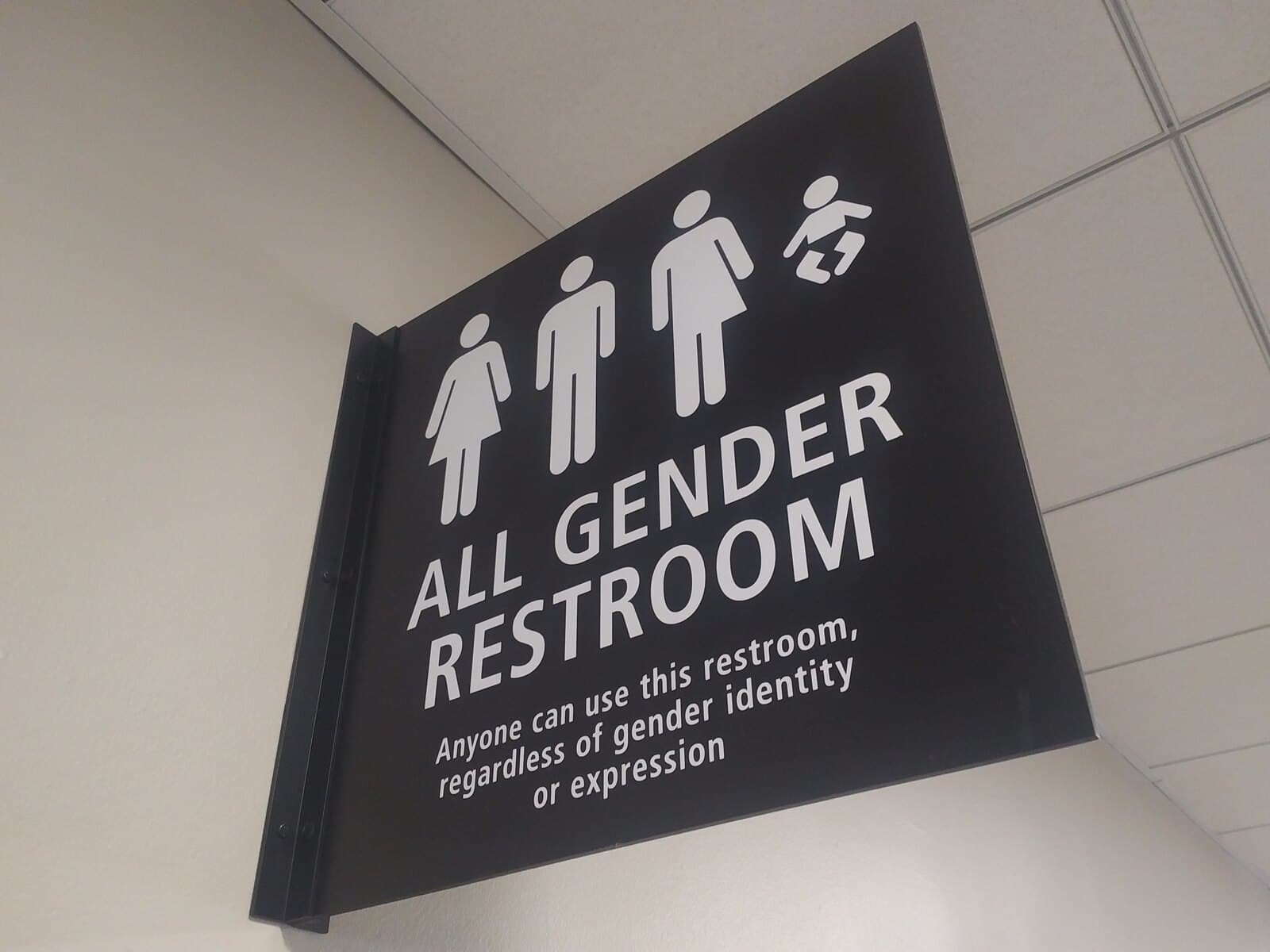
California's new all-gender bathroom law hands small schools an exemption. Read the fine print, and it is a trap.
Start with the promise. As of July 1, a 2023 law requires California's public schools to keep at least one all-gender restroom open to students, but only at campuses already large enough to have more than one boys' room and more than one girls' room. A small school with a single boys' room and a single girls' room is written right out of the mandate. Exempt.
Hold onto that word. It does not survive the budget.
The exemption with a string attached
The law is SB 760, and it has two moving parts. The first is the mandate everyone argued about, and it genuinely lets the smallest campuses off the hook.
The second part is where those campuses get caught. Tucked into a new section of the Education Code is a rule about money: if a district applies to the state for school modernization funds, any project it submits on or after July 1 has to include an all-gender restroom, as The Daily Signal reported. And EdSource notes the campuses the mandate skips are the small ones, a single boys' room and a single girls' room, which is exactly who the money rule catches.
So the exemption holds right up until a small school needs help fixing its building. Then it vanishes. It is the free trial that turns into a subscription, except the customer is a rural elementary school that never signed up.
Picture who that hits. A big district with a dozen restrooms per campus and money in the bank complies by swapping a door lock and reprinting a sign. Sacramento City Unified told the Sacramento Bee it spent more than $100,000 across the district, at roughly $2,500 a lock, and barely broke stride.
A small rural school has neither the spare restrooms nor the spare cash. It has one boys' room, one girls' room, and a repair list a mile long. For a lot of these campuses, real construction money mostly arrives one way: they ask Sacramento for it. And the moment they do, the state hands part of that money back with a condition: build the all-gender restroom first.
An exemption the poorest schools can't use
That is not an exemption. It is a toll.
The schools that qualify for the carve-out are, almost by definition, the ones with the least: the small, the rural, the underbuilt. They also tend to lean hardest on state facilities dollars, because a small or property-poor district usually cannot float the kind of local construction bond a wealthy suburb can. So the one part of the law written to spare them is wired to catch them the instant they ask for help.
Sacramento will tell you the restroom is for "voluntary pupil use," which is true and beside the point. The question was never whether a child has to use it. The question is which schools have to build it, and the answer turns out to be the ones that can least afford to.
The bill's author, then State Senator Josh Newman, said SB 760 "aims to create a safe and inclusive environment not only for non-binary students, but for all students." Maybe so. But a law written for all students should not quietly bill the poorest campuses for it while the richest ones pay in loose change.
Some districts see the setup for what it is. In Chino Valley Unified, board president Sonja Shaw, now running for state superintendent, called it "a mandate from Sacramento that ignores the real priorities of our schools," per the New York Post. For a small campus staring at a leaking roof and a state form that says fix the restroom first, "real priorities" stops being a talking point and becomes the whole problem.
What this should mean for your school
So here is where you come in, because despair is not a plan and small schools do not travel with a lobbyist.
Ask your district one specific question: does our next modernization or facilities project have to include an all-gender restroom to qualify for state money, and what will it cost us? On a small campus, that line item comes straight out of the roof-and-boiler budget, and you are allowed to see the tradeoff.
Then show up when the board votes on that project or a facilities bond. That is where the rule actually bites, and public comment is still yours. A packed room asking why Sacramento is charging the smallest schools for a restroom nobody there requested is exactly the pressure this law was written quietly to avoid.
And tell your kids the plain truth. The old boys' and girls' rooms are still there, using the new one is up to them, and the argument you are having is not with them. It is with a state that wrote small schools a favor and then made sure they could never cash it.
Because the real lesson of SB 760 is not about bathrooms. It is that a promise in the fine print can be a trap, and the campuses least able to afford it are the ones who will pay to learn that.

About the author
Bridget Hill
Culture and Classroom Columnist
Calling out what the culture slips into your kid's classroom while it tells you to relax, on one rule: mom and dad were never the problem.