
Albemarle Let a Counselor Meet Kids Alone, Then Hid It From Parents for Months
The county's pandemic era wellness coaches got private access to children with no cameras and no real notification rule, and the one keeping the records was the counselor himself.

There is a short list of adults you let be alone with your child behind a closed door. The pediatrician is on it. A grandparent, maybe. The person you married. You never wrote the list down, but you know exactly who is on it, and you know you never put anyone there by accident.
Albemarle County, Virginia added a name to your list and did not tell you.
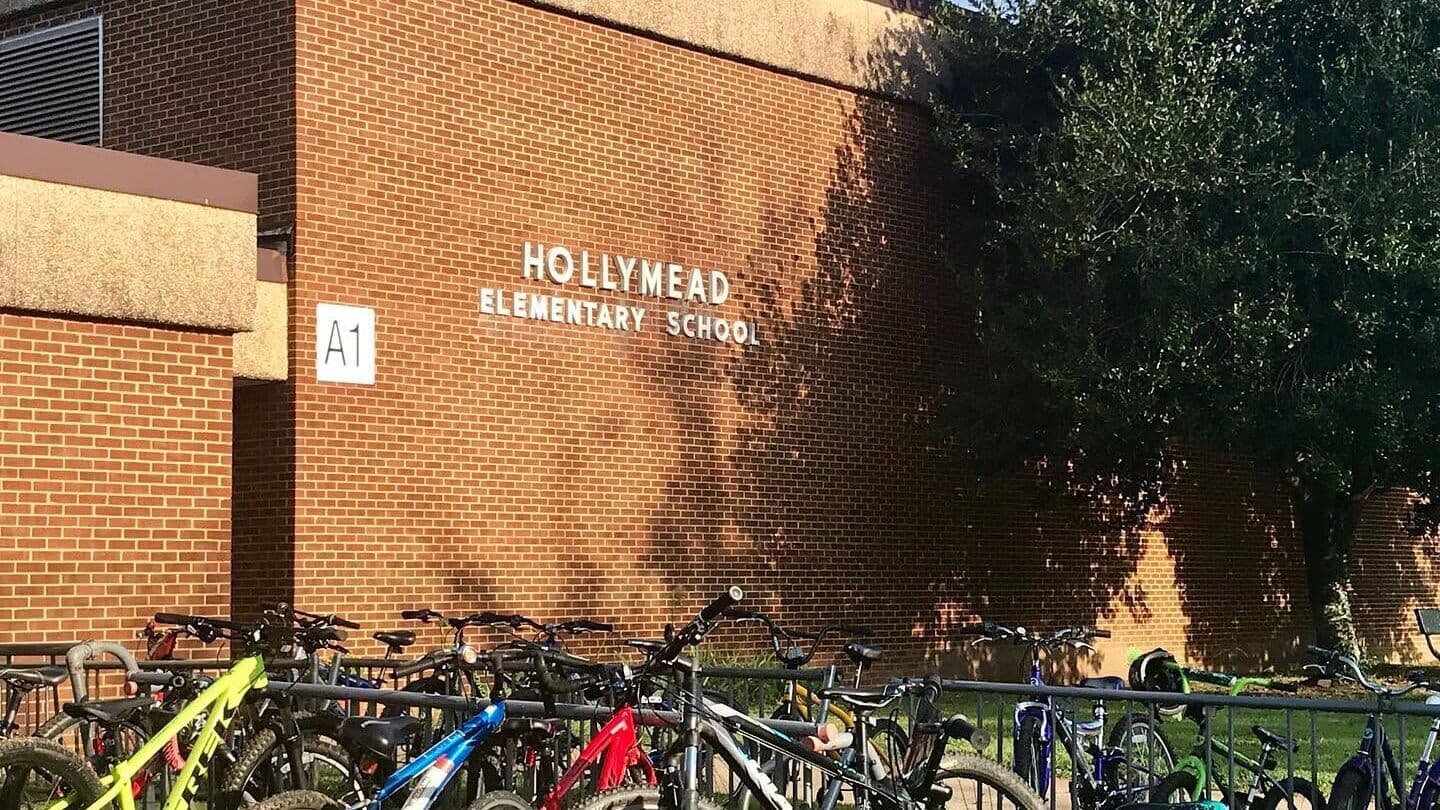
For two years, a man employed at Hollymead Elementary School could call your daughter out of class, walk her down the hall, and close the door of a small office. No camera watched the room. No one asked you first. No phone rang at your house to say it had happened. Michael Swiney, a "social and emotional learning coach," now faces 11 counts of child sex crimes that he is alleged to have committed against Hollymead students in 2024 and 2025.
I am not going to describe what he is charged with doing. The families deserve better than to have it retold for effect. What deserves retelling is how a public school built a job that made it so easy.
A job invented to have no rules
Albemarle had no SEL coaches until the pandemic handed it the money to invent them. In 2021 the district spent 2.4 million dollars in federal Covid relief to hire 24 of them, later growing the ranks to 30. The defining power written into the job was the authority to pull children out of class and lunch for private meetings.
And what did that power require? A bachelor's degree in any subject, three years in some "related field," and, per the district's own job listing, "demonstrated knowledge and skill" in "contemplative methods" like yoga and mindfulness. Experience working with children was not required. Pressed at a public meeting to explain what these adults even were, the superintendent offered that they were "more like TA's."
They were not like TA's, and the teachers knew it. "If you radioed for someone to help, TA's don't have walkie talkies to answer those calls, but Mike Swiney did," said Pam Snead, a Hollymead teacher of ten years. Then she said the sentence no administrator in the room could bring himself to say: "I'm sorry for every child that Mike Swiney took out of my room."
The fox kept the logbook
The district did have one safeguard, and it is the whole story. Parents were supposed to be told when their child was pulled aside to meet a coach. The person responsible for telling them, and for keeping the only written record that the meeting ever happened, was the coach.
Sit with that. The single check on a man alone with a child behind a closed door was that same man's paperwork. The district handed the watching to the watched, then acted stunned when he did what unwatched men do. There was no rule on the books that even forbade an adult from being alone with a student behind a shut door.
We learned to distrust this arrangement everywhere else, usually after it killed someone. In the 1870s a reformer named Samuel Plimsoll went to war over Britain's "coffin ships", rotted and overloaded hulls their owners insured to the gunwales and then certified seaworthy with their own signatures. The fix Parliament reached for in 1876 was not to hope for a better class of owner. It was to paint a line on every hull that any man on the dock could read for himself. Only in the one building we are required by law to hand our children to does "the adult alone with the child keeps his own record of it" still pass for a safeguard.
Five months of silence
The police opened their investigation in January. The district quietly walked Swiney out of the building and told parents nothing about why. There was no letter home, no meeting, no word that anything was wrong. Most families learned that the man who had been meeting their children was under investigation the same way a stranger three states away could, from a police press release in June, after the school year had safely ended.
Asked at last month's community meeting whether any written policy required the school to notify parents, Superintendent Matthew Haas said, "I can't answer that question, I don't know." Then the admission: "it's an unwritten rule."
An unwritten rule is one you can break without ever having broken anything. It is a promise made with the fingers crossed. The single duty that mattered most across those five months, telling parents their child may have been harmed, rested on nothing anyone could point to, enforce, or be fired for ignoring.
The excuse that died in the room
The district's defense for its silence was that it had been ordered into it. Haas said his office "was told not to make contact with parents." It was a clean explanation, and it survived about as long as it took the police chief seated nearby to reach for a microphone.
Notifying parents that their child had been seen by Swiney, the acting chief said, would not interfere with the investigation. The room broke into applause. The one excuse the district had leaned on was corrected, in real time, by the very agency it had hidden behind.
Nor had the district merely been in the dark. Some parents had gone to the school and warned it, they said, long before the police ever opened a case, and were told what parents are always told: that they were overreacting.
One father, active-duty military, went straight at the superintendent. "It's unacceptable in today's age that we can't pull camera footage and see when our child was alone with someone who didn't even have a license," he told Haas. Then the line the district will be answering for a long while: "you need to think hard about that creepy little office inside the library that has no cameras, and that's on you."
The fix is embarrassingly simple
None of this needs a task force, a consultant, or a listening tour. It needs a school to treat a private meeting between a lightly credentialed adult and a child with the seriousness it already brings to a fire drill.
Put a window in the door, or a camera in the room. Write the notification rule down, and place the duty on the school, never on the employee whose conduct it is supposed to expose. Let parents opt in before a stranger begins holding standing, private "check-ins" with their kid. And retire the fantasy that "mental health" is a magic phrase that suspends every rule the rest of the building has to follow.
Who pays tells you who it served
You can always tell whom an institution was built to protect by watching who pays when it fails. In Albemarle, the man who presided over all of it, who could not name a single notification policy, resigned with a raise. Haas keeps his salary and benefits through June 2027, his base pay lifted to 257,165 dollars, an 800 dollar bonus included on the way out.
The principal who was reportedly warned is gone. The school board is shielded from parents' lawsuits by sovereign immunity. And the video of the reckoning was posted where the district's own families would have the hardest time finding it, left unlisted, off the page, reachable only if someone hands you the link.
That is not how an institution behaves when a monster it never could have foreseen slips through. It is how an institution behaves when it is doing exactly what it was designed to do, which is keep the unpleasant business in-house and the parents at arm's length. The abuse was the exception. The silence was the system.
So keep your short list, and guard it the way you always have. Your child's school keeps a list of its own, and yours has never been on it. For two years it sat a stranger alone with your daughter behind a closed door, and for five months more it treated that as a secret worth keeping.
It had exactly one rule for that room, and it never wrote it down.

About the author
David Whitlock
Parental Rights Columnist
Reading the fine print your child's school hopes you skip, on one stubborn conviction: parents, not institutions, hold the final say over their own kids.