
Four Kansas Districts Hid Kids' Gender Transitions From Their Own Parents
Four Kansas districts let schools keep a child's new name, pronouns, and gender transition from her own parents, even when a mother asked. Here is what the federal findings mean, and the one email every parent can send this week.

Every August you fill out the forms, pack the backpack, and hand your child to a building full of adults you have to trust. You assume that if something big changes in your daughter's life, the school will tell you. For families in four Kansas districts, that assumption turned out to be wrong.
Until this spring, a mother in Olathe, Shawnee Mission, Topeka, or Kansas City, Kansas could ask her child's school, in writing, what name and pronouns her child was using all day long, and the district's own policy let the school tell her no.
That was not a paperwork mix-up. It was the plan.
A secret between a school and your child
Here is how it worked. The districts treated a child's new name, new pronouns, and new identity at school as the child's private information, something the school would guard from the parents unless the child agreed to tell them herself.
The institution appointed itself the keeper of a secret between a daughter and her own mother. And that is the thread running under this whole story: in four Kansas districts, the school decided it would stand in the parent's place.
Federal investigators found the districts had policies that let schools conceal a child's so-called gender transition from parents, down to the name printed on a diploma, even when a parent asked to see the records.
The question nobody wants to answer
We are told all of this protects children. So let us ask the question the whole debate keeps tiptoeing around: what does it cost the child?
In Shawnee Mission, according to a complaint the Department took seriously, a first-grade girl walked into the girls' restroom and found a boy there. She was so unsettled that she began slipping away to a staff bathroom, alone, just to feel safe. She was six.
A six-year-old should not have to negotiate her own privacy. That is the grown-ups' job, and here the grown-ups decided, in her parents' place, what she was old enough to handle.
The same instinct runs through the secrecy. Picture a thirteen-year-old who goes by a boy's name for seven hours a day, then comes home to a mother passing the potatoes who has no idea. The one place a child should never have to carry a heavy secret alone is inside her own family, and a policy like this leaves the people who love her most the last to know.
The law finally caught up
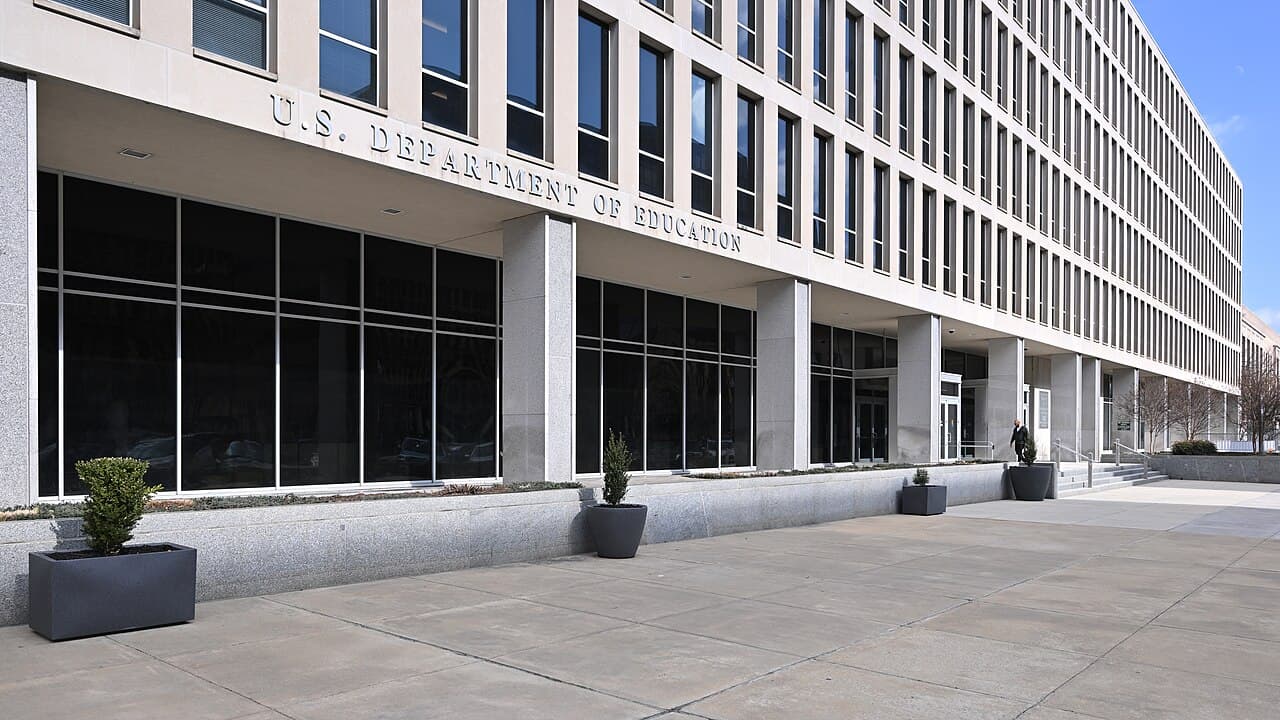
This spring, after months of investigating, the U.S. Department of Education found all four districts in violation of federal law. All four had kept parents from records they had every right to see, and all four had let students use restrooms and locker rooms by gender identity. In Kansas City, Kansas and Topeka, that reached into girls' sports.
On June 11 it gave Olathe, Shawnee Mission, and Topeka ten days to comply or risk losing federal funding, and told Kansas City, Kansas it had reached an impasse.
None of this should have required an act of Washington. Kansas law already said boys do not belong in girls' locker rooms. And Education Secretary Linda McMahon put the principle plainly: "by natural right and moral authority, parents are the primary protectors of their children."
When "privacy" means "secrecy"
Notice what happened to a perfectly good word. "Privacy" used to mean the school does not hand your child's records to strangers. Here it was bent to mean the school keeps your child's records from you, her own parent.
"Safety" got the same treatment. Officials said safety while a little girl hid in a staff bathroom. "Inclusion" became the reason to exclude the two people a child needs most.
A policy that has to bend three good words at once is not protecting children. It is protecting itself.
What you can do this week
You do not need a law degree or a seat on the school board to start. You need an email.
Write your district, dated, and ask three plain questions. One, what is your policy on telling parents when a child asks to change name or pronouns at school? Two, may a staff member withhold that from me if I ask? Three, who is allowed in my daughter's restroom and locker room?
Keep the thread. A written question creates a record, and a record changes the answer you get.
Then do the quieter, harder work at home. Be the parent your child can bring anything to. Make sure yours is the first door she runs to, not the last.
Who does a child belong to?
Strip away the acronyms, Title IX and FERPA and the rest, and one plain question is left. Who does a child belong to?
Scripture does not hesitate. "Children are a heritage from the LORD" (Psalm 127:3). A heritage is entrusted, not assigned by a district office. Your authority over your child is not a permission the school grants you, and it is not theirs to revoke.
A school can be a wonderful partner to a family. It cannot be the parent, and it was never meant to keep secrets from one.
So take heart. The findings and the deadlines will pass. The bond between you and your child, and the God who gave her to you, outlasts every policy memo. Send the email this week, keep the door open at home, and remember that you were her first teacher and her safest place long before any school had an opinion about it.